 Scott Sistek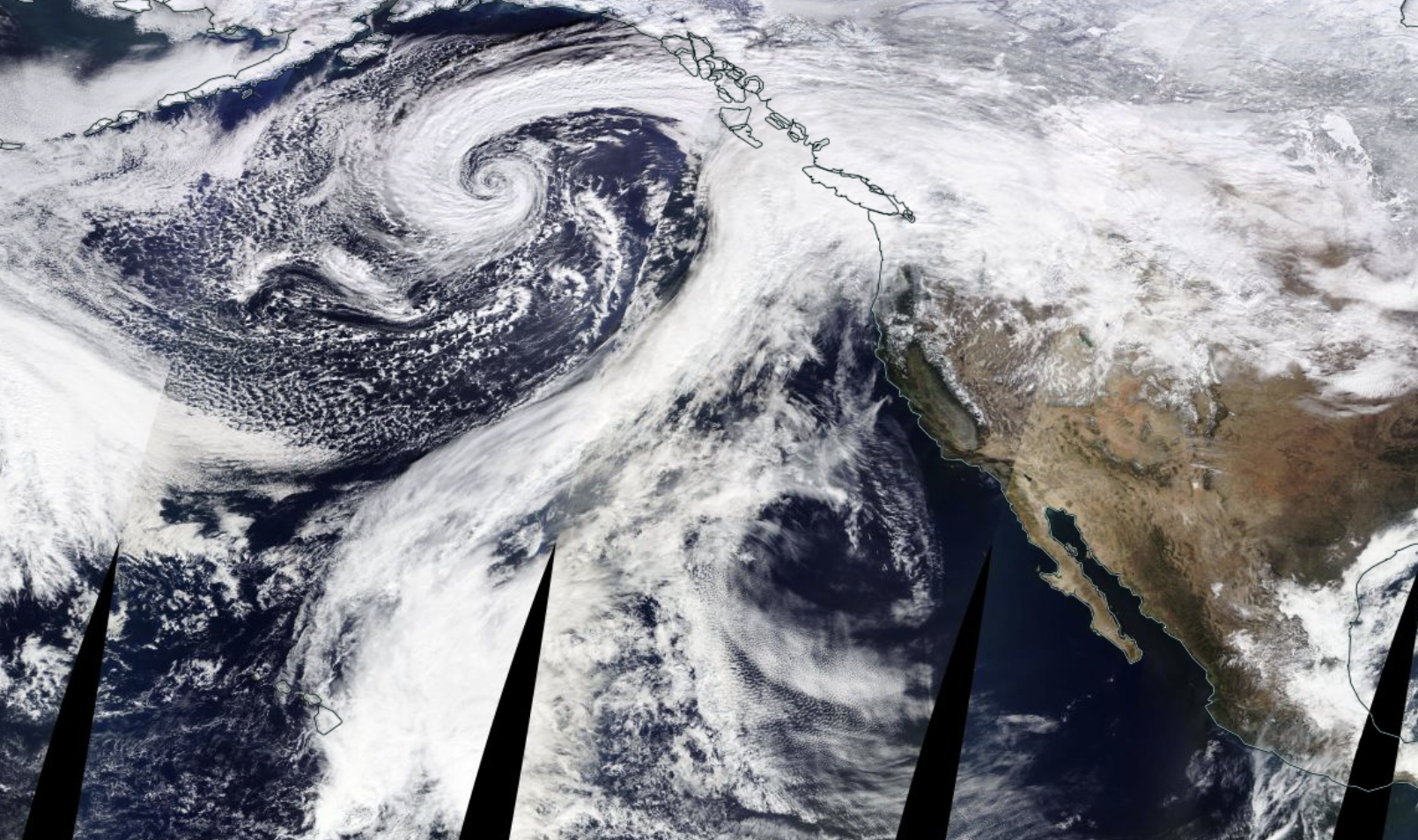
Satellite image showing a Pineapple Express storm on Jan. 28, 2018. (Photo: NOAA MODIS)
You’re going to hear meteorologists talk about it a lot in the fall and winter around the Pacific Northwest: “There’s an atmospheric river-type storm on the way”. We may even mention it in tandem with a rating or category as there is even now a 5-point scale to rate ARs.
An “atmospheric river” (AR) is a relatively newer term in the weather world, given to a name of storms that tap into deep tropical moisture and then transport enormous amounts of that moisture to higher latitudes, usually bringing a period of warm, heavy rains.
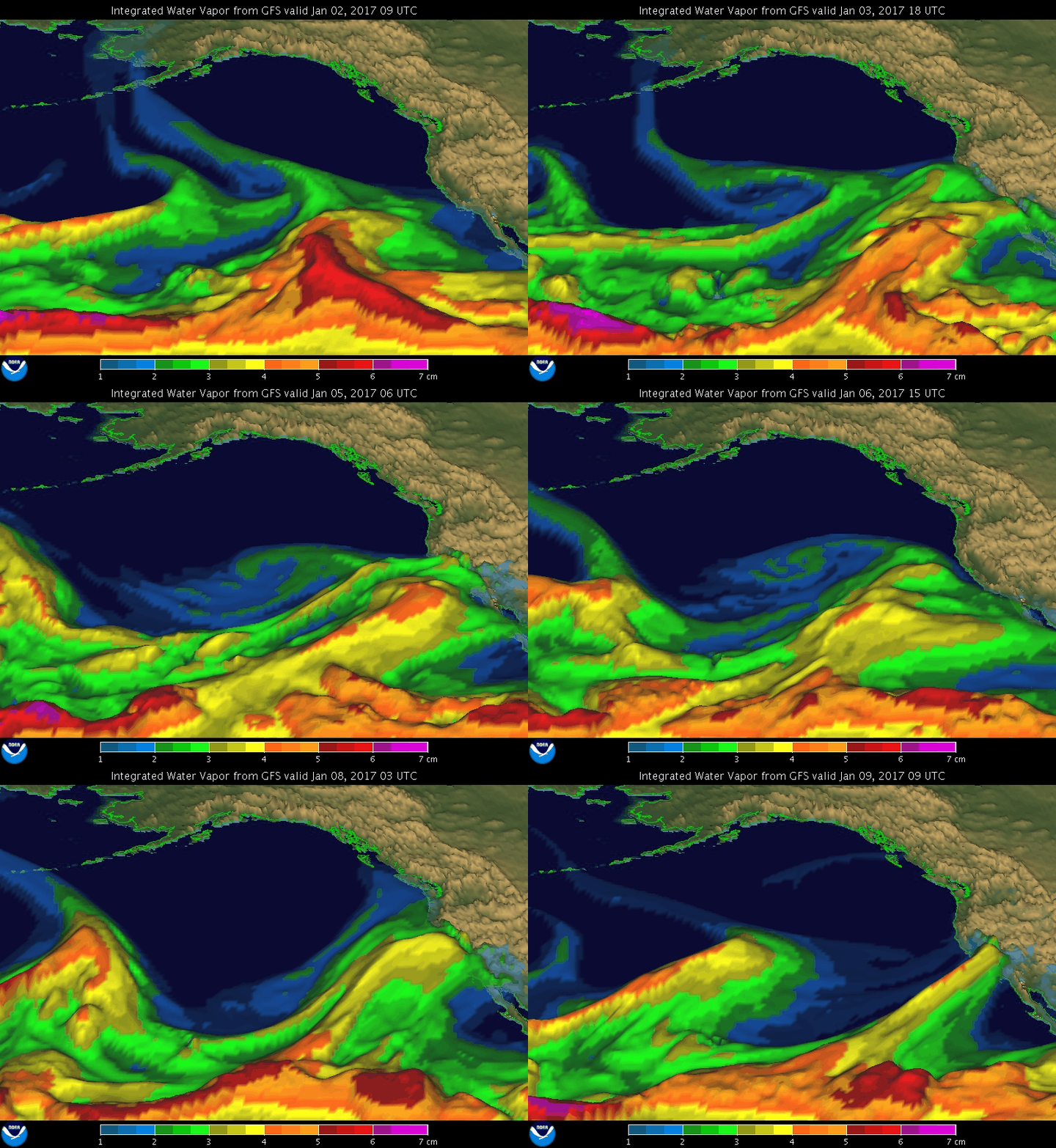
Researchers with the Center for Western Weather & Water Extremes (C3WE) found typical AR’s can carry as much water as 14-23 times the entire volume of the Mississippi River!
Stronger atmospheric rivers can bring extreme rainfall and lead to devastating flooding. Just about all of Washington and Oregon’s historical floods are at the hands of ARs.
But while AR’s usually only make waves when they are exceptionally strong and impactful, many of the typical storm systems that roll through the Pacific Northwest and California also qualify as ARs. In fact, the vast majority are considered beneficial and are needed to keep our reservoirs full and droughts at bay (especially in California, but also up here.)
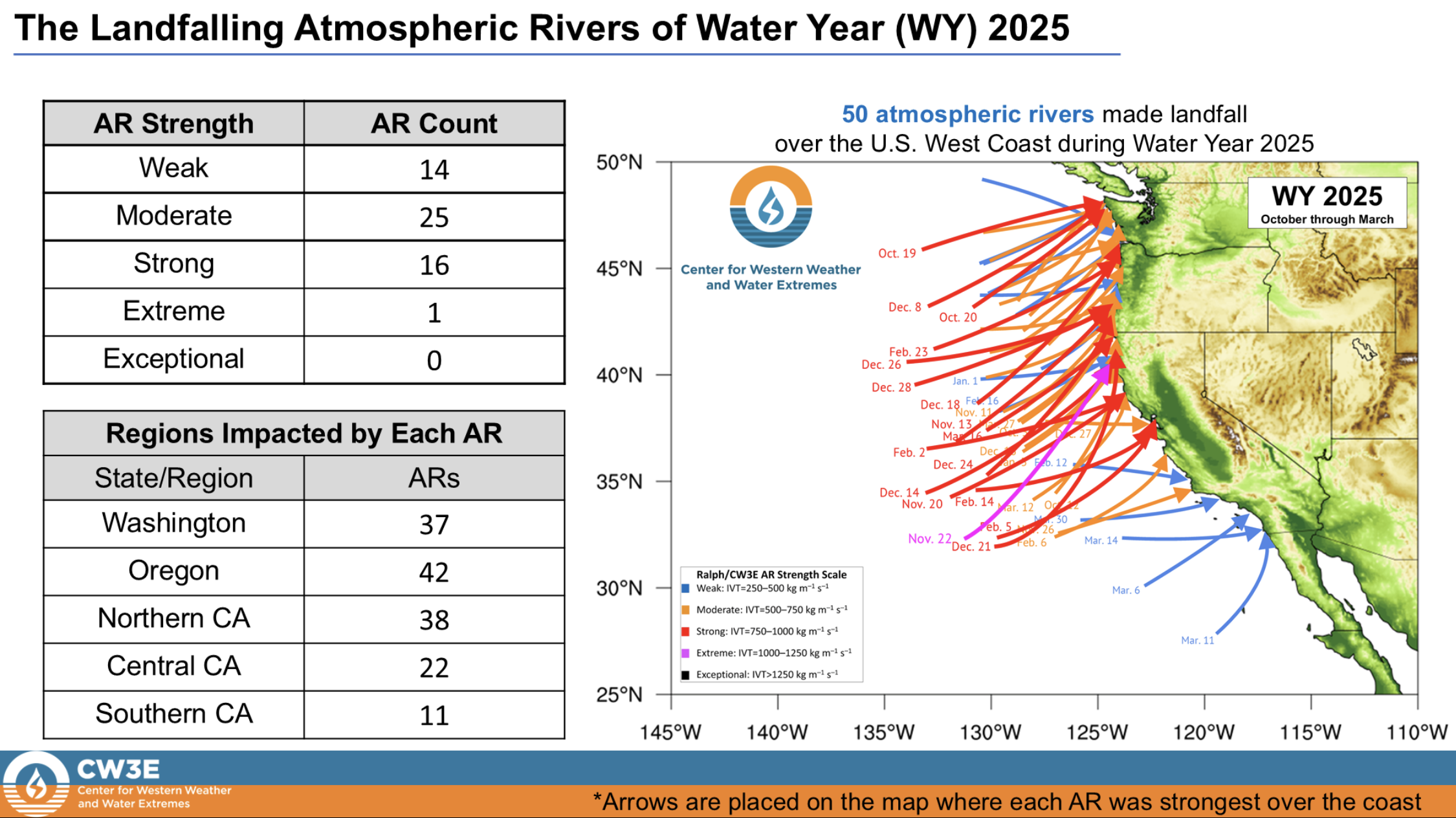
Last fall and winter, the C3WE folks classified 56 storms that hit the Pacific Coast as atmospheric rivers, of which 37 impacted Washington. The year before, 51 storms hit the West Coast; 41 in Washington (and 46 in Oregon.)
BUT WAIT, WHY DIDN’T WE HAVE 37 FLOODING EVENTS IN WASHINGTON LAST YEAR THEN?
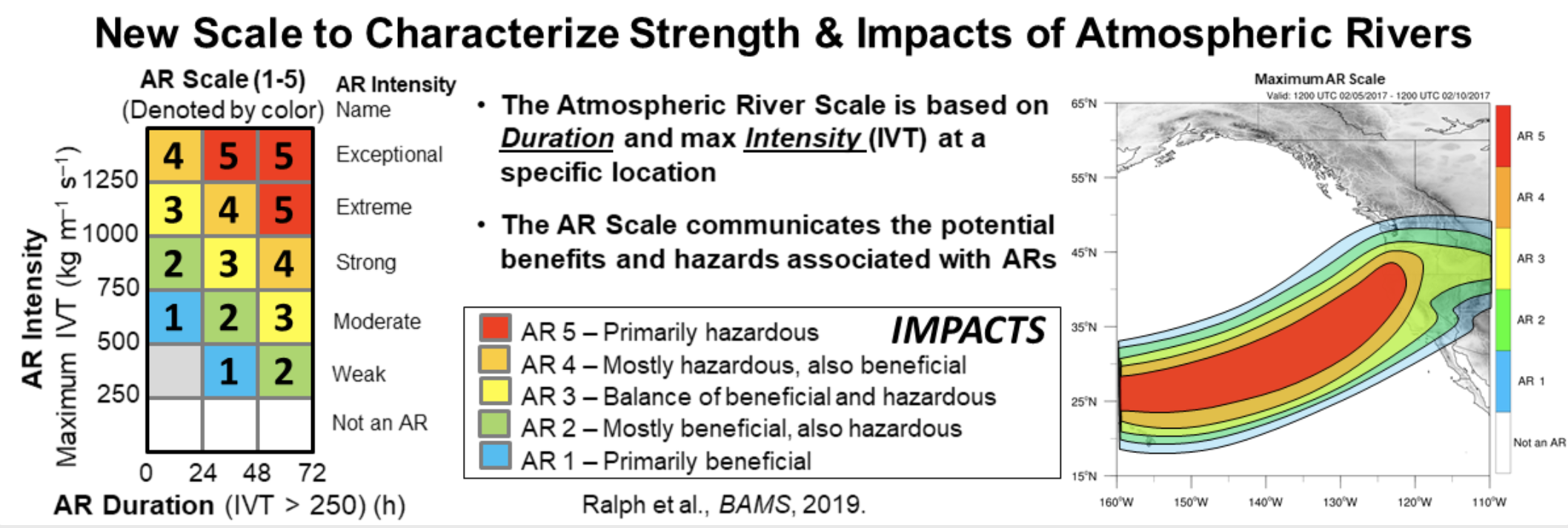
Yes, most of the ARs bring a lot of rain, but don’t cause problems. To that end, the CW3E has developed a 5-point scale to help give meteorologists and emergency planners some guidance on when ARs are at levels that provide beneficial rain and help the region or could cause significant flooding impacts (or both!)
The scale is based on the amount of moisture a storm has available and how long it’s expected to last.
But there are some distinct differences between the AR scale and some more well-known 5 category weather scales such as the Saffir-Simpson Scale for hurricanes or the Enhanced Fujita Scale for tornadoes.
First, while a Category 1 or 2 hurricane or EF-1 tornado is still destructive, Category 1 or 2 ARs denote mostly beneficial rains — as in they bring in good wetting rains, but not enough to cause mayhem. An AR3 means it’s about 50/50 good and bad, and AR 4+ now we start getting into significant flooding impacts.
Unlike one size fits all for hurricane and tornado ratings, the AR scale also varies based on geography. A city under direct impact may rate a Category 4 AR but a city 100 miles south may be in a level 2.
Also of important note: The impact from an AR is also dependent on the current situation. An AR 4 or 5 during a stretch of stormy wet weather in fall or winter can really overwhelm already high rivers and cause significant flooding. However, in the middle of the August dry season when rain has been sparse and rivers are very low, the region can handle a level 4 or even a 5 without much impact.
Last year, of the 56 ARs, the CW3E rated just one a Category 4, and there were no Category 5s. The year before there were two Category 4s and no Category 5s.
So bottom line: ARs are pretty frequent and most are beneficial, but stronger ones can bring severe flooding impacts.
WHAT IS A ‘PINEAPPLE EXPRESS’ THEN?
“Pineapple Express” has been around longer than “AR” and is an informal nickname area meteorologists gave for an AR storm that taps into tropical moisture from near Hawaii (thus, the “pineapple” origin.)
Pineapple Expresses usually bring very mild and wet conditions in the late fall and winter, and surprisingly are responsible for many of our record highs in the November-January time frame when they juice wintertime temperatures well into the 50s if not low 60s.
One trick to remember is that all Pineapple Express storms are an atmospheric river, but not all atmospheric river storms are Pineapple Expresses (if they source their tropical moisture from other areas in the Pacific Ocean besides Hawaii.)