How the Olympic Rain Shadow creates a literal ‘blue hole’ over Sequim
 Scott Sistek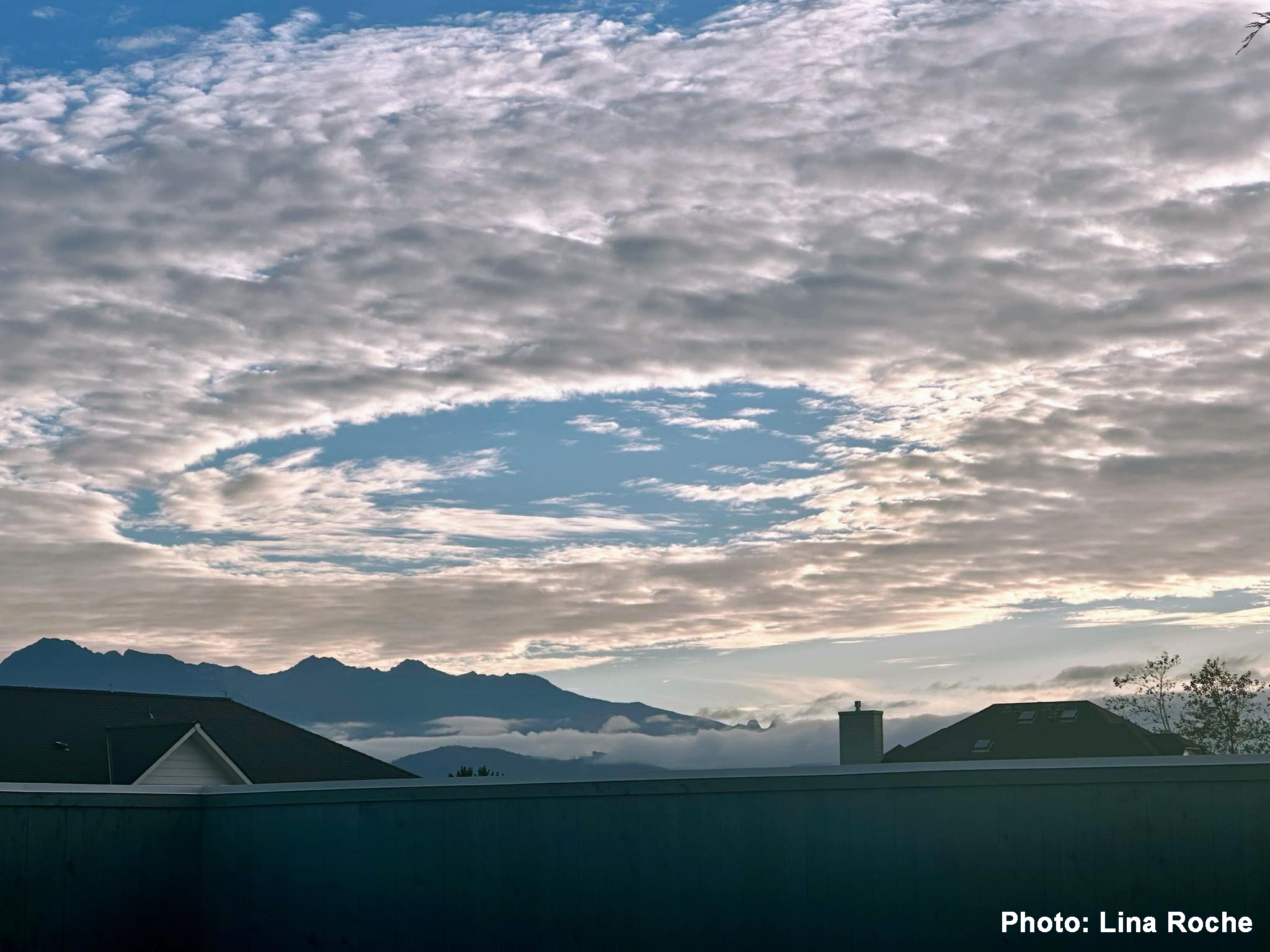
A hole opens up in the clouds over Sequim likely part of the Olympic Rain Shadow. (Photo courtesy: Lina Roche)
SEQUIM, Wash. — Does Sequim, nestled over on the northern Olympic Peninsula, really get 300 days of sunshine a year — a seeming miracle oasis amid one of the grayest regions in the U.S.?
Hmmm… 300 days might be a stretch — unless you count like brief 12 second sunbreak on an otherwise cloudy day. BUT! Sequim is indeed the driest and sunniest city in Western Washington, offering a place just over 2 hours from Seattle that gets less annual rain than Flagstaff, and it’s all thanks to the Olympic Rain Shadow.
SO HOW MUCH EXTRA SUN DOES SEQUIM GET?
The amazing folks at OlympicRainShadow.com did extensive research some years ago measuring observed sunshine in Sequim and compared it to Seattle over a year and it really illustrate’s Sequim’s sunshine advantage.
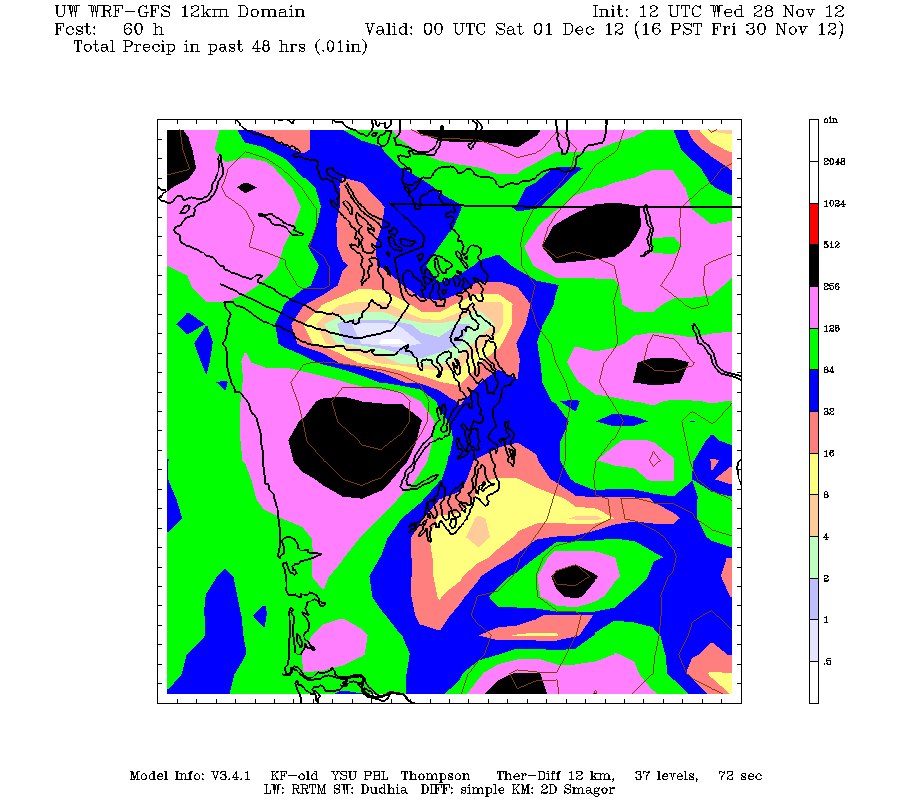
For the study’s year spanning 2010-2011, they found Sequim had 69 extra days where it was partly or mostly sunny there vs. overcast or even “dreary” in Seattle, with much of the advantage coming in winter and spring.
Overall, Sequim had 254 days of either mostly sunny or partly sunny skies, versus Seattle’s 205. (Note: They used a different measurement than NOAA does for considering whether a day is cloudy. The study used observed sunshine; NOAA uses observed cloud cover. According to NOAA, Seattle averages 139-140 sunny or partly sunny days and 226 cloudy days a year, but they consider up to 20% clearing as still a cloudy day.)
HOW DOES THIS MAGIC WORK?
Sequim is in the perfect location sitting behind the massive rain shield that are the Olympic Mountains. As moisture-laden storms come off the Pacific Ocean out of the southwest, the air currents slam into the southwestern-facing slopes that act like a ramp. As the air is forced to rise over the mountains, it cools and condenses, squeezing out its moisture like a sponge.
The result is on the windward facing side of the mountains is gobs and gobs of rain and the creation of the Olympic Rain Forest — one of the wettest places int he Lower 48 with 140-200 inches of rain a year!
However, once that air now climbs over the summit, it has already wrung out most of its moisture and rainfall. But then as it sinks down the leeward, northeastern side of the Olympics, the process reverses and the air undergoes additional drying, saping much of what’s left for potential rainfall.
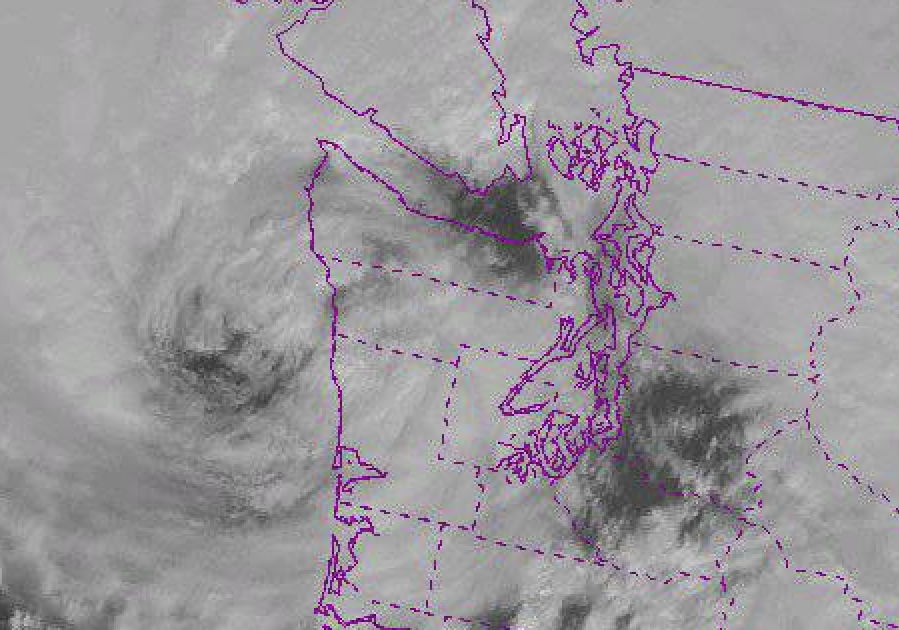
Sequim is lucky to be in the heart of that zone and the result is even on some of our wettest, stormiest days, Sequim may get nothing more than a drizzle. Many times you can even see a hole in the overcast on satellite image sitting over the Northeastern Olympic Peninsula — even more dramatic than Lorena’s photo above — and surmise the sun is out in Sequim while it’s pouring everywhere else.
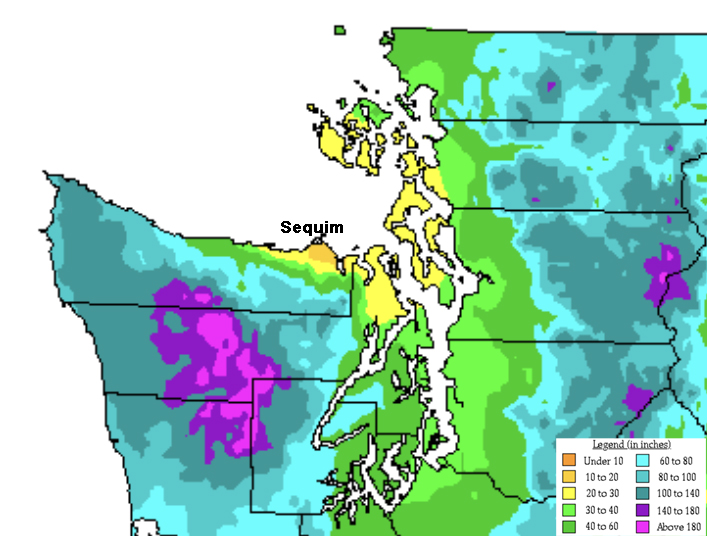
Overall, Sequim gets only about 16-18 inches of rain per year. But the shadow doesn’t just cover Sequim, as you can see on the map above, it extends west to about Port Angeles (~25 inches), and east to Port Townsend and Whidbey and Camano Islands, and north to the San Juan Islands — and even a bit across the Strait of Juan de Fuca to around Victoria, B.C.
But the change is dramatic as you emerge from the shadow. Just 90 miles west along the coast, Forks gets about 120 inches of rain a year. In fact, once you get to Port Angeles and start driving west, you gain about 1 inch of annual rainfall for each mile you drive.
SEATTLE EVEN OCCASIONALLY BORROWS THE RAIN SHADOW
While the most pronounced effects of the rain shadow are over the Northeastern Olympic Peninsula, the Olympics help block some rain from reaching parts of the Puget Sound area too. A majority of the Pacific storms come in from the southwest, but some occasionally come in from due west. In that case, the shadow extends due east of the Olympics and covers the Seattle-Everett area and Kitsap Peninsula.
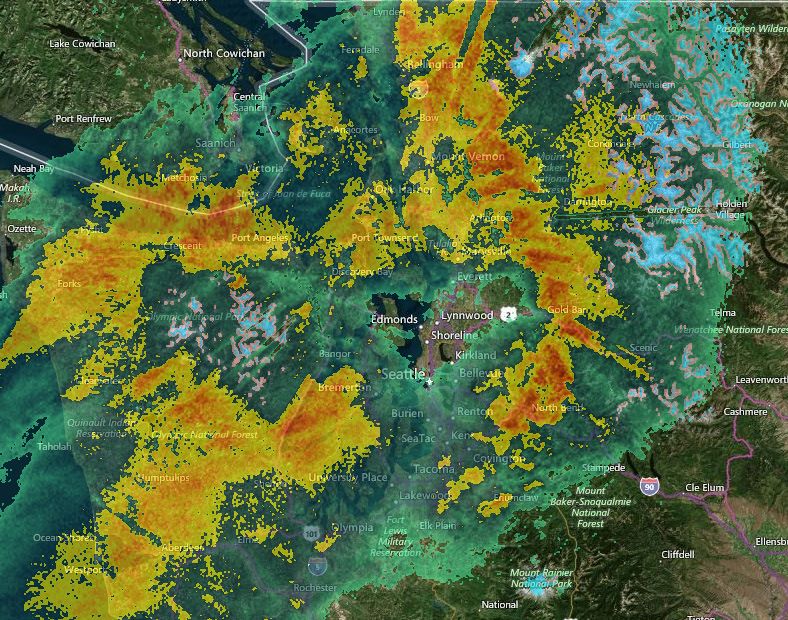
The result is Snohomish County and northern King County only averages about 31-33 inches of rain a year, while rainfall totals increase as you get farther south down the I-5 corridor and away from the shadow. Sea-Tac Airport gets 39 inches a year, and Olympia usually gets around 50 inches of rain a year.