 Scott Sistek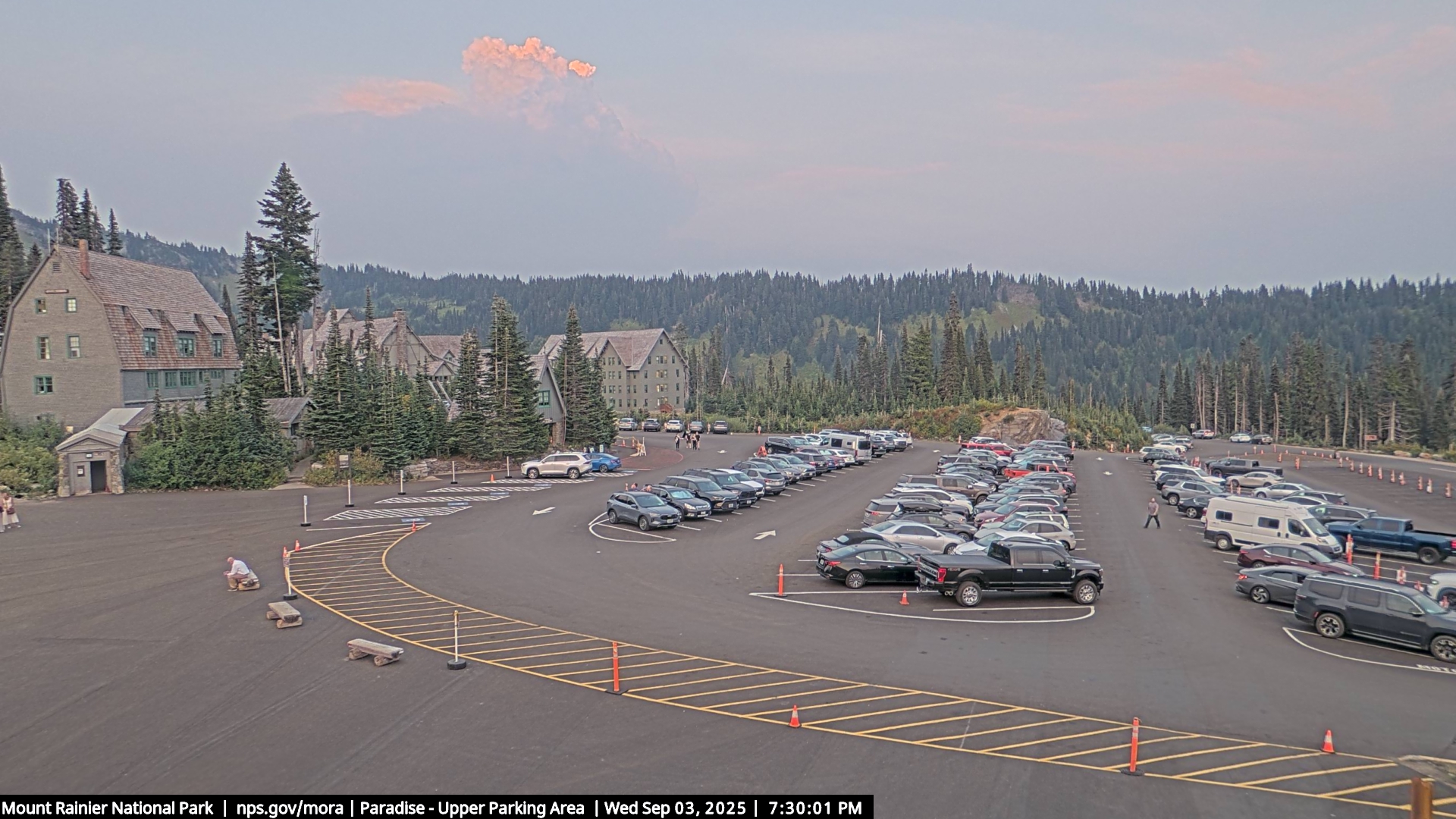
Pyrocumulus cloud towers over Eastern Washington above the Wildcat Fire on Sept. 3, 2025. (Photo: Mount Rainier National Park Webcam)
The Wildcat Fire, burning in the central Cascades near Mt. Rainier, exploded to life Wednesday afternoon, creating a towering “pyrocumulus” cloud that was so tall, it cast a massive shadow into central Washington as seen by weather satellite.
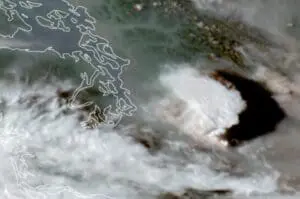
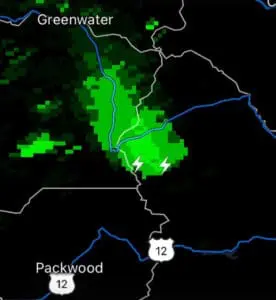
But not only did it create shadows, it created its own lightning! Lightning detection sensors picked up at least three strikes emanating from the cloud this afternoon.
Sometimes the intense heat from large wildfires can mix with an unstable air mass to create their own clouds — instead of cumulus clouds via natural convection, these “pyro” cumulus clouds are sourced from fire’s heat.
But like regular cumulus, pyrocumulus can generate its own lightning and strong, shifting winds, creating dangerously erratic weather conditions near the fire.
At last report Wednesday afternoon, the Wildcat fire had doubled in size since Wednesday morning to 2,700 acres and was 0% contained. It, ironically, was triggered by lightning from a natural thunderstorm on Aug. 25 but has just in the last few days really taken off.
SMOKE FROM OTHER WILDFIRES CONTINUES TO POUR INTO THE PACIFIC NORTHWEST
So far, the Wildcat Fire hasn’t been a significant source of smoke outside the immediate area, but the same can’t be said for many of the other fires burning across the West.
For Seattle and *most* (but not all!) of Western Washington, the smoke has been imported from fires burning in Oregon and California and thus has been aloft. It’s still enough to keep it rather hazy, but so far air quality has held in “moderate” category with not too much making it to the surface.
That is NOT the case up near the Canadian border, where some surface smoke from southern B.C. fires has moved into Whatcom County with air quality dropping to orange or red levels.
It’s also NOT the case in Eastern Washington where several local fires are combining with near 100 degree heat and stagnant conditions plus the imported smoke aloft to make a real literal hot mess over there. It’s especially bad in Northeastern Washington where multiple fires are burning with air quality in unhealthy ranges across Colville area with unhealthy for sensitive groups around Spokane.
There is no real relief in sight there through the end of the week, be it heat or smoke. It’s just about literally what you see is what you get for the next few days at least.